Academic Work
Universal Store
Universal Store was competing everywhere and owning nothing in particular. I recommended narrowing the audience and activating it through three tactics designed to work as one system rather than three campaigns.
Year :
2025
Industry :
Fashion Retail
Brand :
Universal Store (academic engagement)
Project Duration :
24 Weeks
Problem :
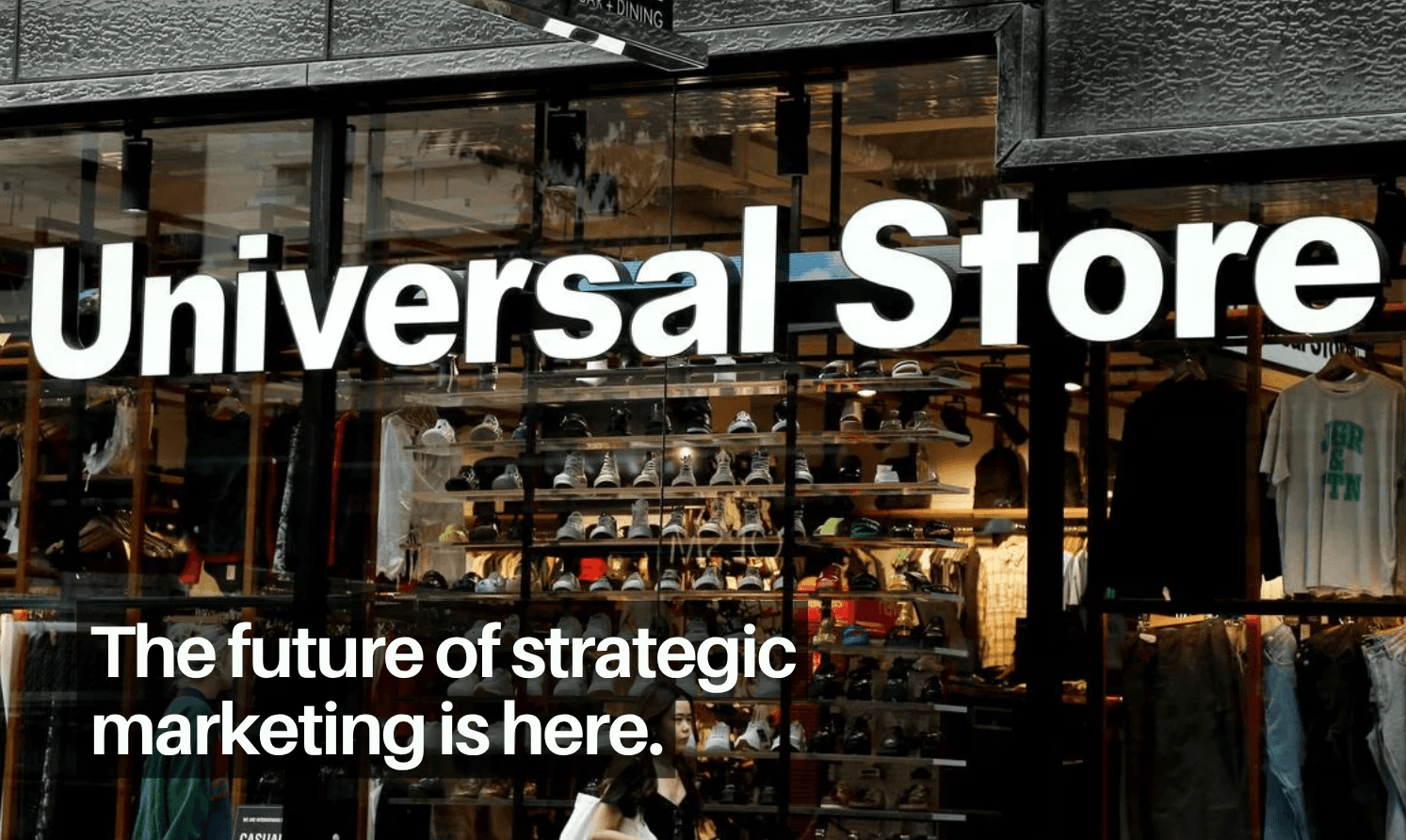
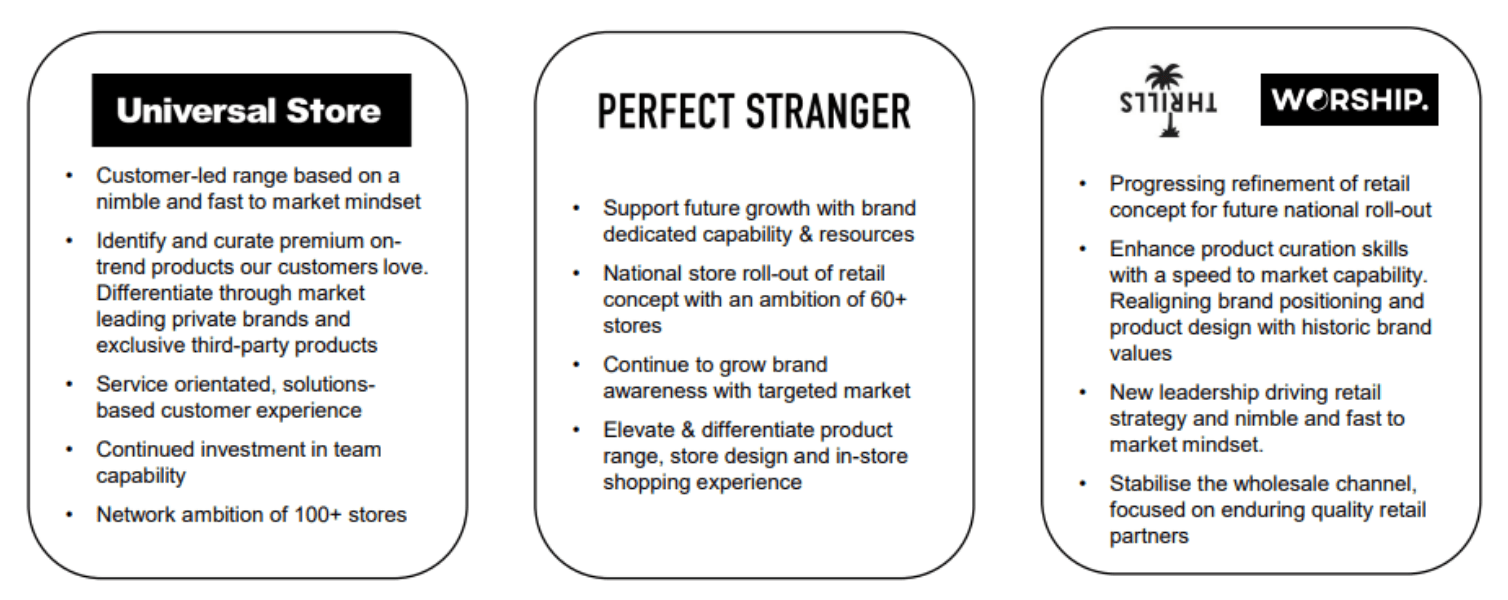
Universal Store was competing everywhere. Broad range, broad audience, broad positioning, in a market where ultra-discount platforms were eating the price-sensitive end and premium brands held the other. The brand had real assets: Perfect Stranger as a private label, strong fulfilment infrastructure, genuine full-price discipline. What it didn't have was focus, so none of those assets were compounding. They were just sitting there.
Solution :
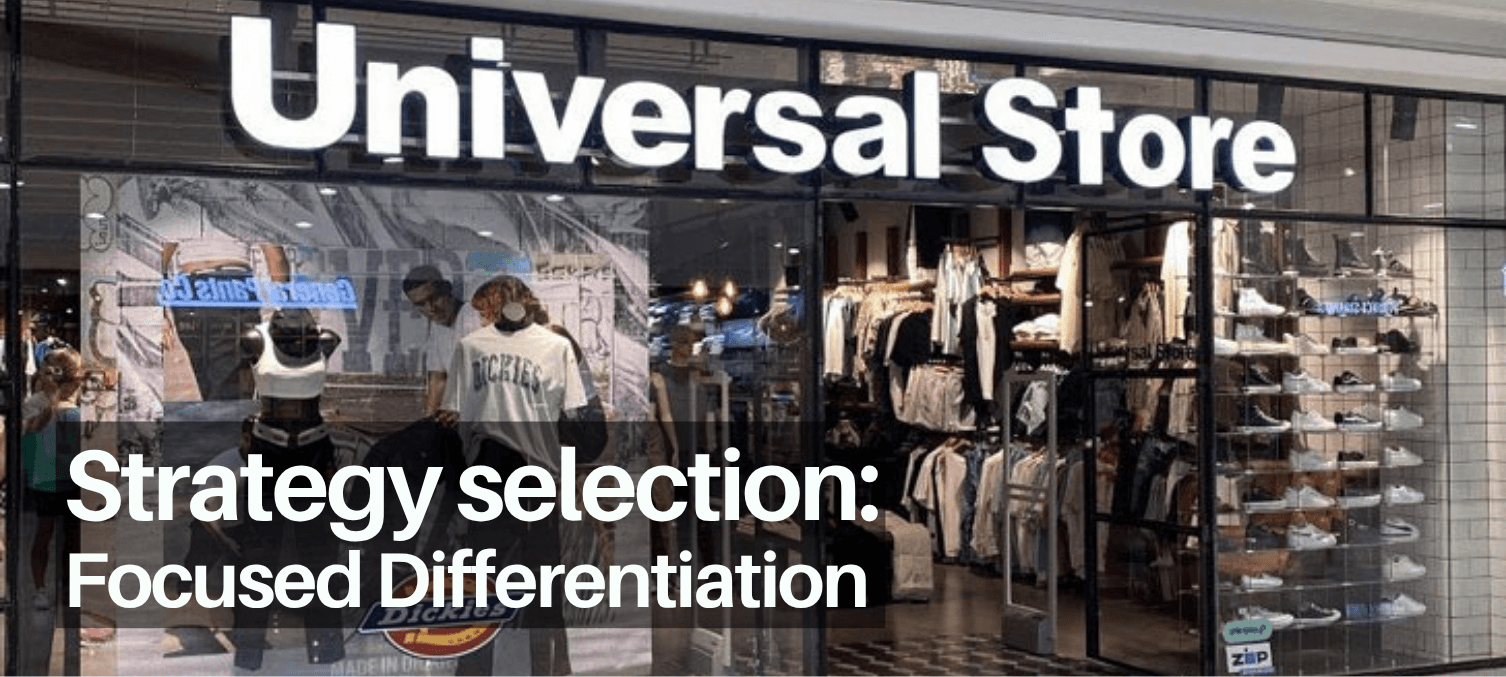
Stop trying to be for everyone. Differentiation focus: narrow the target to Gen Z and young Millennials who buy on identity rather than price. A smaller, more intentional audience the brand could actually own.
Three tactics built it out.
Creator capsules under Perfect Stranger. Limited runs co-designed with creators, scarcity built in, waitlists, shoppable video. Not inventory. Cultural moments, each drop treated as an event rather than a restock.
Fast click and collect plus same-day delivery, using the existing store network as a fulfilment mesh. Real-time stock visibility on product pages. A pickup promise customers could rely on. Infrastructure that already existed, asked to do more.
Members-only access and drop calendars in owned channels. Early access tied to membership rather than discounts. Lifecycle journeys built around the drop schedule. Referrals rewarded with access, not percentage-off coupons.
Challenge :
Three separate tactics are easy. Three that work as one system is harder. The fulfilment promise had to be genuinely supportable. The membership programme had to feed the capsule calendar rather than sit beside it. The financials had to hold once operational costs were in the model.
The Balanced Scorecard was how I made the logic visible, tracing organisational alignment down to revenue outcomes with specific metrics at every link. Without it, it's a recommendation. With it, it's something a management team can act on.
Summary :
Delivered to Universal Store's management team as the capstone of the Strategic Marketing programme at RMIT. A three to five year strategy with phased implementation, from codifying capsule assets in the short term through to personalised omni-channel delivery at scale.
The brand was trying to be for everyone. The opportunity was in being exactly right for someone.
More Projects

Academic Work
Universal Store
Universal Store was competing everywhere and owning nothing in particular. I recommended narrowing the audience and activating it through three tactics designed to work as one system rather than three campaigns.
Year :
2025
Industry :
Fashion Retail
Brand :
Universal Store (academic engagement)
Project Duration :
24 Weeks
Problem :
Universal Store was competing everywhere. Broad range, broad audience, broad positioning, in a market where ultra-discount platforms were eating the price-sensitive end and premium brands held the other. The brand had real assets: Perfect Stranger as a private label, strong fulfilment infrastructure, genuine full-price discipline. What it didn't have was focus, so none of those assets were compounding. They were just sitting there.
Solution :
Stop trying to be for everyone. Differentiation focus: narrow the target to Gen Z and young Millennials who buy on identity rather than price. A smaller, more intentional audience the brand could actually own.
Three tactics built it out.
Creator capsules under Perfect Stranger. Limited runs co-designed with creators, scarcity built in, waitlists, shoppable video. Not inventory. Cultural moments, each drop treated as an event rather than a restock.
Fast click and collect plus same-day delivery, using the existing store network as a fulfilment mesh. Real-time stock visibility on product pages. A pickup promise customers could rely on. Infrastructure that already existed, asked to do more.
Members-only access and drop calendars in owned channels. Early access tied to membership rather than discounts. Lifecycle journeys built around the drop schedule. Referrals rewarded with access, not percentage-off coupons.
Challenge :
Three separate tactics are easy. Three that work as one system is harder. The fulfilment promise had to be genuinely supportable. The membership programme had to feed the capsule calendar rather than sit beside it. The financials had to hold once operational costs were in the model.
The Balanced Scorecard was how I made the logic visible, tracing organisational alignment down to revenue outcomes with specific metrics at every link. Without it, it's a recommendation. With it, it's something a management team can act on.
Summary :
Delivered to Universal Store's management team as the capstone of the Strategic Marketing programme at RMIT. A three to five year strategy with phased implementation, from codifying capsule assets in the short term through to personalised omni-channel delivery at scale.
The brand was trying to be for everyone. The opportunity was in being exactly right for someone.
More Projects
Academic Work
Universal Store
Universal Store was competing everywhere and owning nothing in particular. I recommended narrowing the audience and activating it through three tactics designed to work as one system rather than three campaigns.
Year :
2025
Industry :
Fashion Retail
Brand :
Universal Store (academic engagement)
Project Duration :
24 Weeks
Problem :
Universal Store was competing everywhere. Broad range, broad audience, broad positioning, in a market where ultra-discount platforms were eating the price-sensitive end and premium brands held the other. The brand had real assets: Perfect Stranger as a private label, strong fulfilment infrastructure, genuine full-price discipline. What it didn't have was focus, so none of those assets were compounding. They were just sitting there.
Solution :
Stop trying to be for everyone. Differentiation focus: narrow the target to Gen Z and young Millennials who buy on identity rather than price. A smaller, more intentional audience the brand could actually own.
Three tactics built it out.
Creator capsules under Perfect Stranger. Limited runs co-designed with creators, scarcity built in, waitlists, shoppable video. Not inventory. Cultural moments, each drop treated as an event rather than a restock.
Fast click and collect plus same-day delivery, using the existing store network as a fulfilment mesh. Real-time stock visibility on product pages. A pickup promise customers could rely on. Infrastructure that already existed, asked to do more.
Members-only access and drop calendars in owned channels. Early access tied to membership rather than discounts. Lifecycle journeys built around the drop schedule. Referrals rewarded with access, not percentage-off coupons.
Challenge :
Three separate tactics are easy. Three that work as one system is harder. The fulfilment promise had to be genuinely supportable. The membership programme had to feed the capsule calendar rather than sit beside it. The financials had to hold once operational costs were in the model.
The Balanced Scorecard was how I made the logic visible, tracing organisational alignment down to revenue outcomes with specific metrics at every link. Without it, it's a recommendation. With it, it's something a management team can act on.
Summary :
Delivered to Universal Store's management team as the capstone of the Strategic Marketing programme at RMIT. A three to five year strategy with phased implementation, from codifying capsule assets in the short term through to personalised omni-channel delivery at scale.
The brand was trying to be for everyone. The opportunity was in being exactly right for someone.